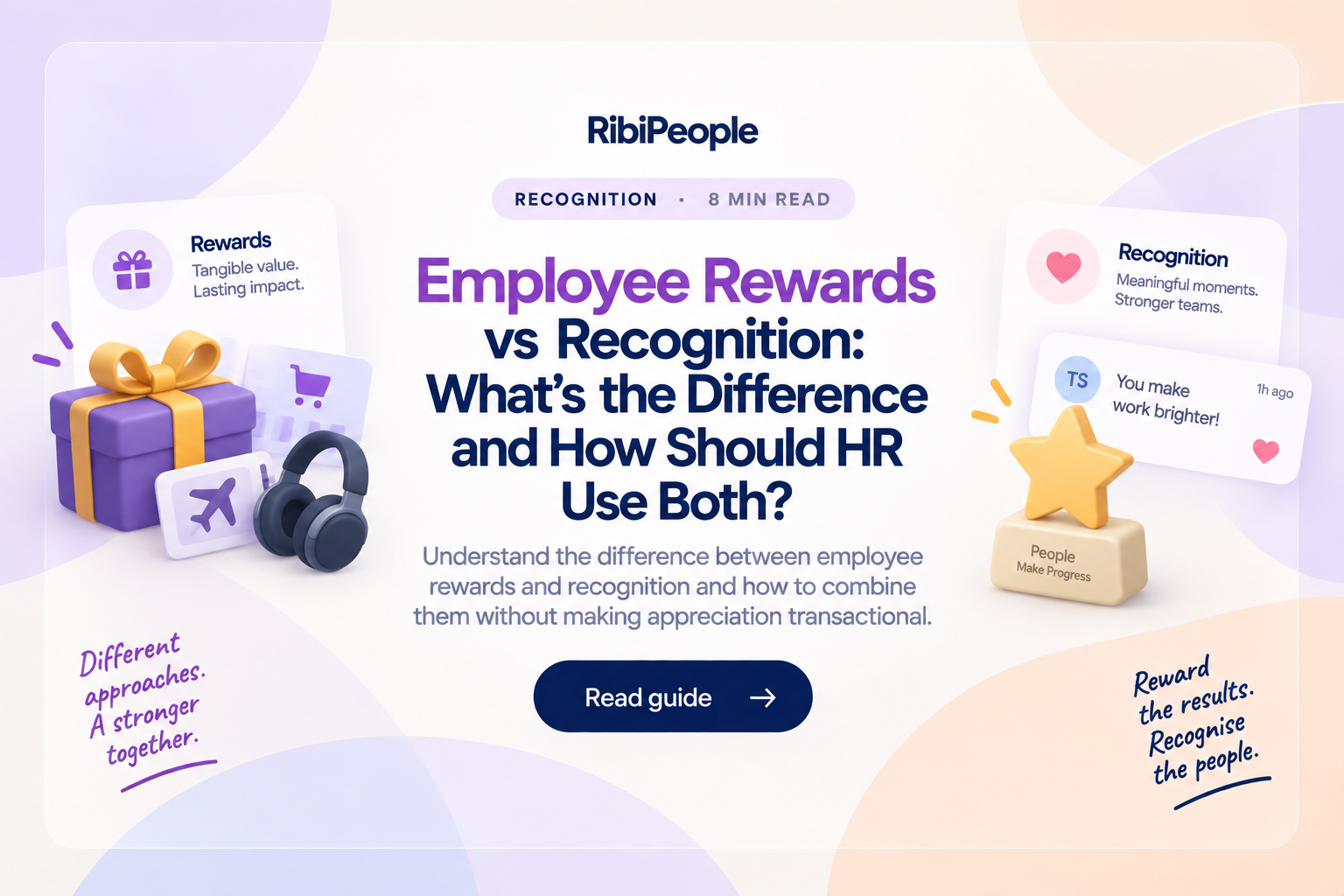
Rewards and recognition are often bundled together, but they solve different problems. Recognition is the act of acknowledging a contribution or milestone. A reward is something of value given to the employee.
They work well together, but treating them as identical can make appreciation feel transactional.
Recognition is primarily social and cultural
A specific thank-you from a manager or colleague can reinforce behaviours and make work feel visible. It can happen frequently and does not require a financial budget every time.
Rewards add tangible value
Gift cards, experiences, products, points or other benefits can mark higher-impact achievements and important moments. Rewards need budget rules, fulfilment and reporting that recognition alone does not.
Use a recognition ladder
One useful model is to match the response to the moment. Everyday appreciation can be message-only; stronger contributions might receive points or a choice reward; major achievements may receive a larger reward or experience.
This creates consistency without attaching money to every interaction.
Keep both in one employee experience
Although the concepts are different, employees benefit when recognition and rewards live in one place. A recognition message can lead naturally to a reward, while HR maintains one view of budgets and participation.
Frequently asked questions
Explore how RibiPeople works or book a demo to discuss your programme.