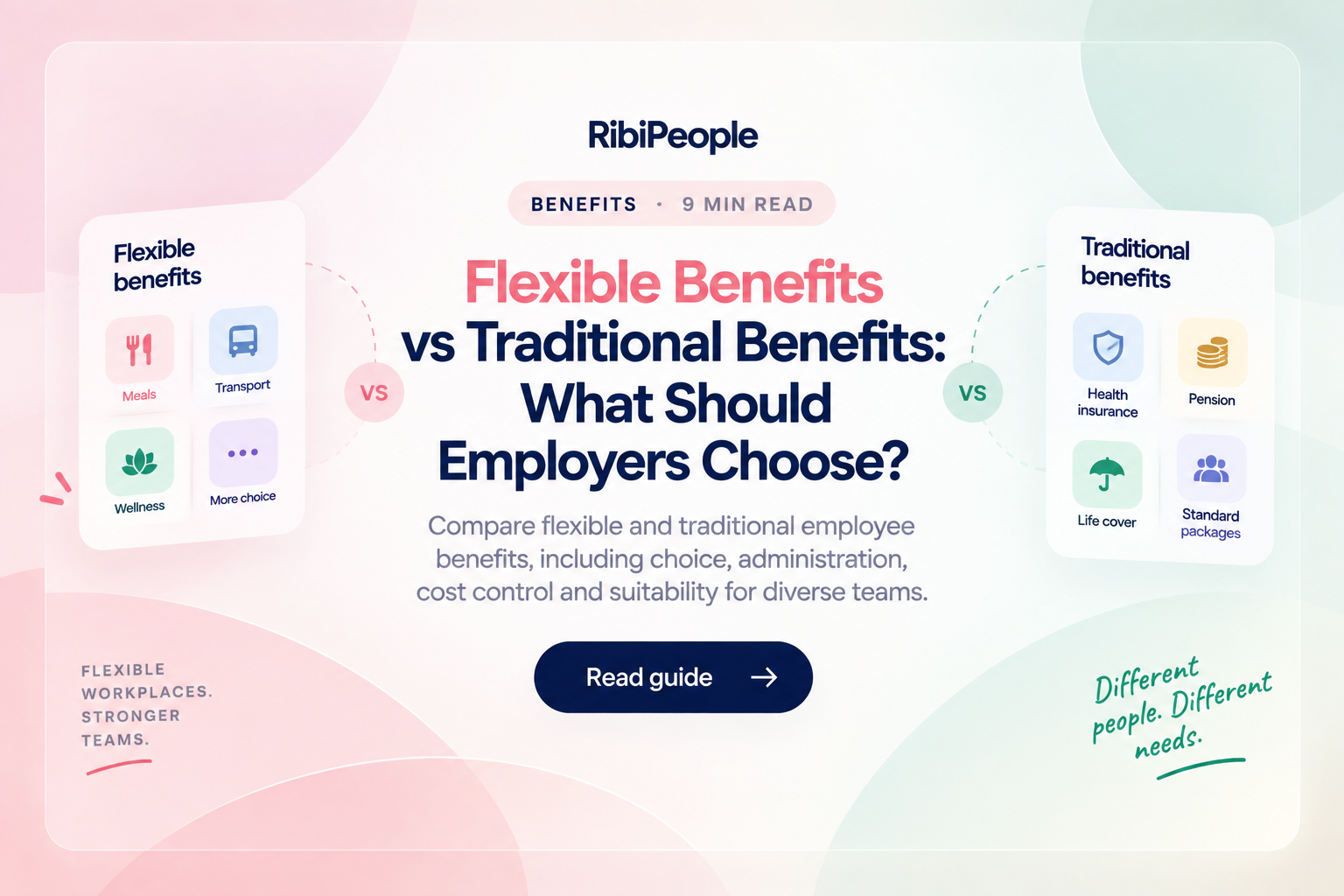
Traditional benefits give everyone a defined package. Flexible benefits give employees some choice over how a budget or set of options is used. Neither model is automatically better. The right answer depends on the benefit, workforce and level of control the employer needs.
For diverse or multi-country teams, flexibility can solve a real relevance problem: employees at different life stages and in different markets often value different things.
Where traditional benefits work well
Some benefits are valuable precisely because they are standardised. Core health coverage, statutory benefits and company-wide protection products may need consistency rather than choice.
Traditional structures can also be easier to communicate when the benefit is universally relevant.
Where flexibility creates value
Flexibility is strongest when preferences vary materially. One employee may prioritise gym access, another therapy, another learning and another transport support. Giving all four the same perk can produce low utilisation.
A flexible allowance or marketplace lets the employer define the boundaries while employees choose within them.
Control does not have to disappear
Flexible does not mean unrestricted cash. Employers can set budgets, categories, eligibility, renewal rules and available catalogues. The employee gets choice inside a governed programme.
That distinction is important for Finance teams concerned about predictability and for HR teams trying to maintain a clear benefits philosophy.
A hybrid model is often strongest
Many employers will land on a hybrid: core benefits for everyone, plus flexible budgets for categories where preference varies. Recognition, gifting and experiences can then sit alongside those benefits rather than being forced into the same programme.
The result is a broader employee experience without requiring HR to administer every element separately.
Frequently asked questions
Explore how RibiPeople works or book a demo to discuss your programme.