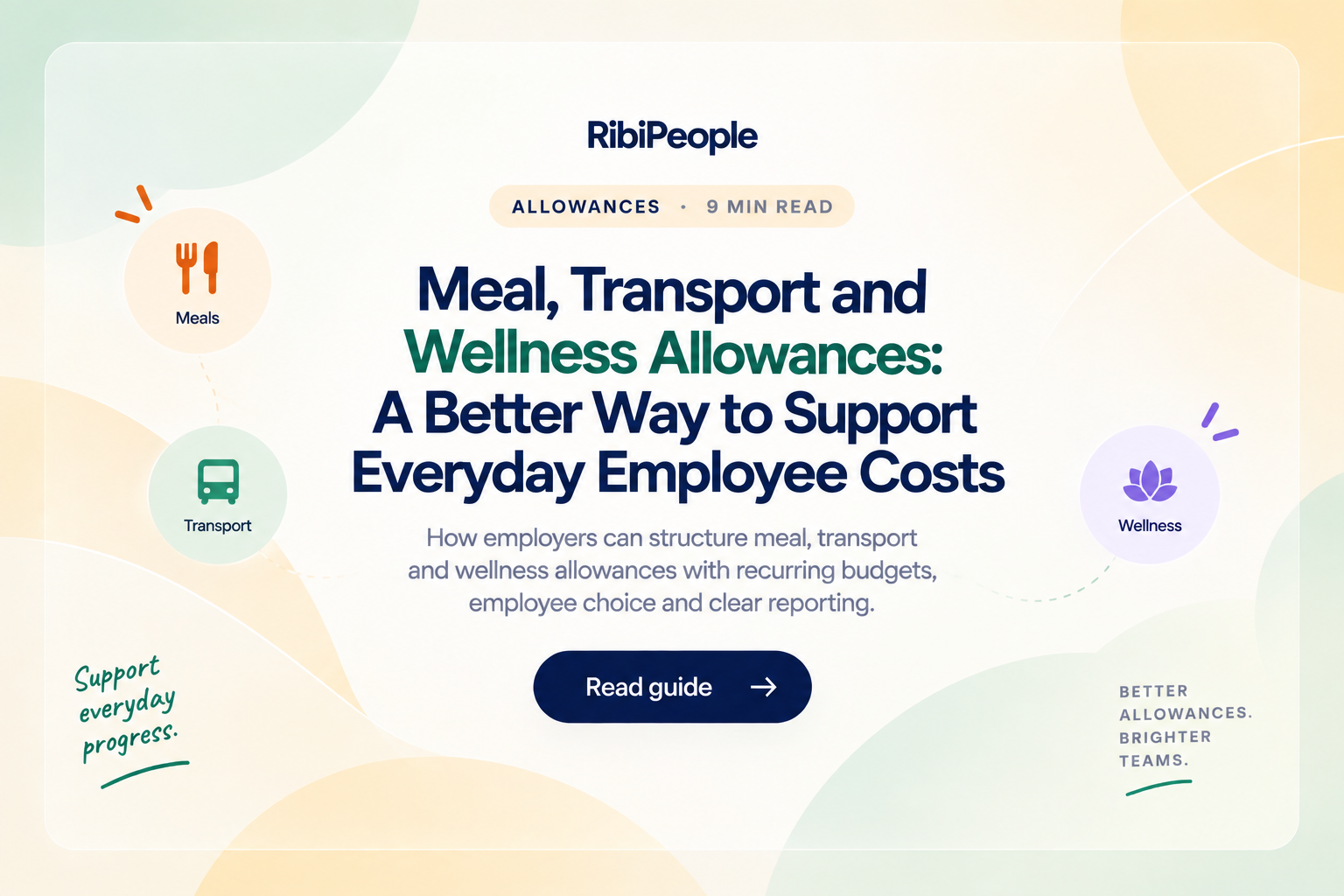
Meal, transport and wellness support sits close to employees’ everyday lives. That makes these allowances potentially high-value, but also easy to administer badly through ad hoc reimbursements or unclear payroll lines.
A programme approach gives each allowance a purpose, budget, cadence and employee experience.
Meal allowances
Meal support can be delivered as a recurring budget employees use with relevant food options rather than a one-size-fits-all voucher. The key is enough local choice to make the allowance genuinely usable.
For hybrid teams, consider whether the programme should work only near offices or support employees wherever they work.
Transport allowances
Transport support may cover commuting, ride-hailing or other locally relevant mobility options. The programme design should reflect how employees actually travel in each city rather than assuming one transport pattern across markets.
Clear monthly funding and visibility can make the benefit easier for employees to value.
Wellness allowances
Wellness is broader than gym membership. A useful programme may include fitness, therapy, health checks, spa and recovery experiences or other approved services.
Choice is particularly important because wellbeing needs vary significantly between employees.
One wallet or separate budgets?
Some employers prefer separate balances so each programme retains its purpose. Others prefer a broader lifestyle wallet. The right model depends on how strongly the company wants to direct spend.
Whichever approach you choose, employees should understand the rules without reading a policy document every time they use the benefit.
Frequently asked questions
Explore how RibiPeople works or book a demo to discuss your programme.